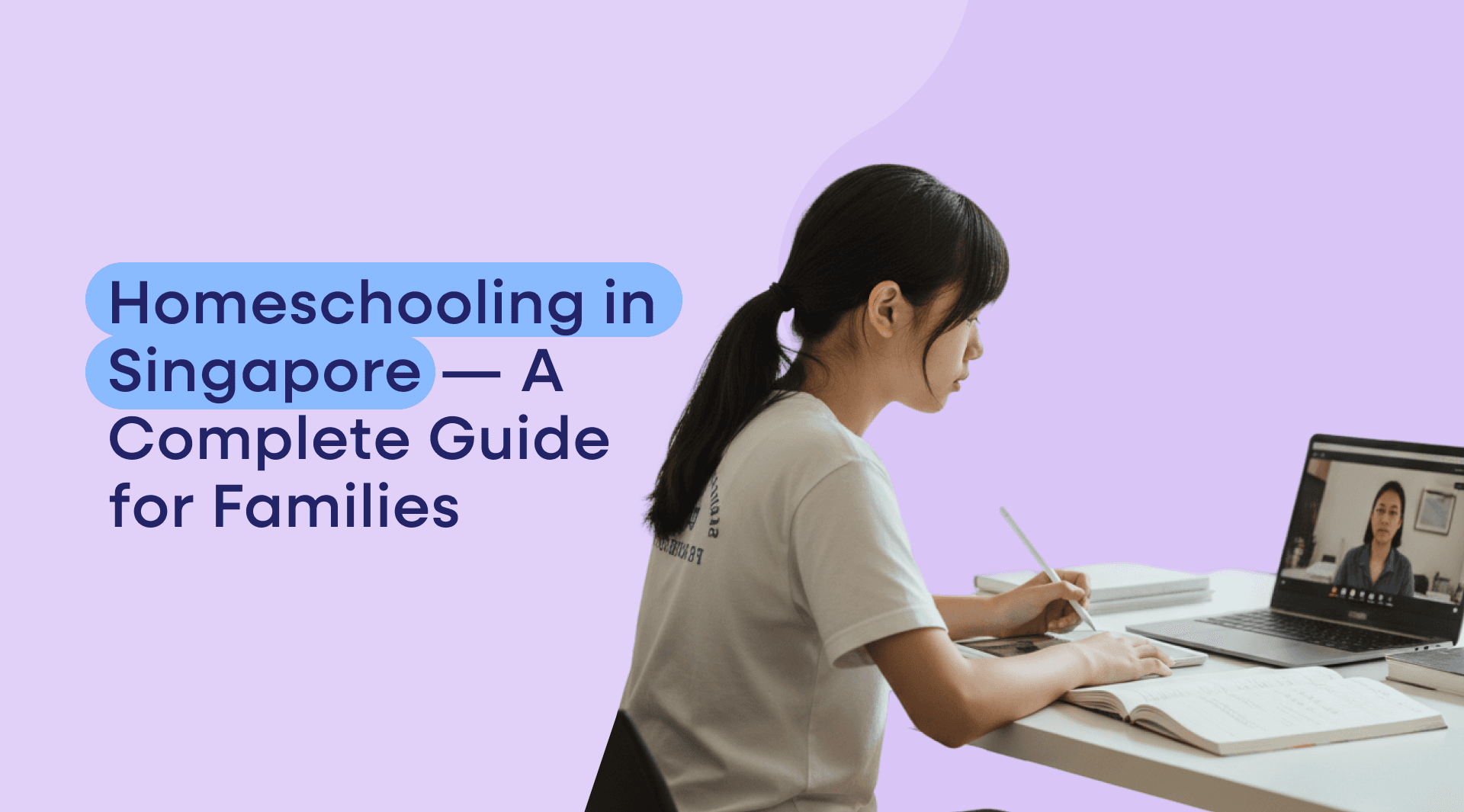
Homeschooling in Singapore — A Complete Guide for Families
Homeschooling means different things to different families, and in Singapore, the legal position depends heavily on your child's citizenship. This guide explains the framework clearly, then sets out the practical options — including where a structured online school fits.
Homeschooling in Singapore is legal, but the rules differ sharply depending on citizenship status. Singapore citizens (and permanent residents) of compulsory school age must attend a national primary school unless granted a formal exemption by the Ministry of Education's Compulsory Education Unit, and homeschooled citizen children must sit the PSLE. Expatriate and foreign families are not subject to the Compulsory Education Act and are free to choose homeschooling, an international school, or an online school without any MOE exemption. Understanding which category your family falls into is the essential first step.
Is homeschooling legal in Singapore?
Yes, but with an important distinction.
For Singapore citizens and permanent residents: Under the Compulsory Education Act, Singaporean children of compulsory school age must attend a national primary school unless the Ministry of Education grants an exemption. To homeschool, parents must apply to the MOE's Compulsory Education Unit, demonstrate a credible educational plan that meets the core objectives of compulsory education (including National Education), and — if approved — the child must sit the Primary School Leaving Examination (PSLE) and a checkpoint test. The MOE generally expects the homeschooling parent to hold a degree, though exceptions are possible. The application window runs roughly from July to October, and parents are advised to register with a national primary school concurrently in case the exemption is not granted.
For expatriate and foreign families: Expatriates living in Singapore are not subject to the Compulsory Education Act. Non-citizen families are free to choose how they educate their children — at an international school, through homeschooling, or at an online school — with no MOE exemption or registration required. This makes Singapore one of the more straightforward environments for expat home-based education.
This distinction is fundamental, so confirm your family's position before doing anything else. (Regulations can change; the MOE's Compulsory Education Unit is the authoritative source for citizens, and families should verify their specific situation directly.)
The spectrum of "homeschooling" options
"Homeschooling" covers several very different arrangements:
Parent-led homeschooling — the parent designs and delivers the curriculum and assessment. Maximum control, maximum parental workload.
Curriculum-package homeschooling — the family buys structured materials but the parent still teaches and marks most of it.
Tutor-supported homeschooling — tutors are layered onto a home-education base for specific subjects.
Online schooling — qualified teachers deliver the full curriculum and assessment online; the most structured, professionally-supported end of the spectrum.
For many Singapore families — particularly those who want recognised qualifications and qualified teaching without becoming teachers themselves — an online school is the option that offers home-based flexibility with professional structure. See how an online school differs from going it alone.
Where an online school fits
An online school is, in effect, homeschooling with professional instruction. The child learns from home, but qualified subject specialists deliver the lessons, set and mark the work, track progress and guide the pathway to qualifications.
For expat families in Singapore, this is often the most practical route: it requires no MOE exemption, it delivers recognised qualifications, and it removes the heavy workload of parent-led homeschooling. Teneo delivers live-taught Pearson Edexcel International GCSEs, AS and A Levels online — a complete British curriculum education from home.
For Singapore-citizen families, an online school following a foreign curriculum still sits within the Compulsory Education framework, so it is essential to clarify your obligations with the MOE first — including the PSLE requirement and, where relevant, the waiver process for attending a foreign-system education.
Choosing the right option
Option | Parent workload | Qualifications | Best for
Parent-led | Very high | Self-arranged | Confident, available parents with subject expertise
Curriculum package | High | Self-arranged | Families wanting structure but teaching themselves
Online school | Low | Recognised, teacher-led | Families wanting professional teaching and qualifications from home
Frequently asked questions
Is homeschooling legal in Singapore?
Yes, but the rules differ by citizenship. Singapore citizens and PRs need an MOE exemption to homeschool and must sit the PSLE; expatriate families are not subject to the Compulsory Education Act and may homeschool or use an online school freely. Confirm your family's category with the MOE Compulsory Education Unit.
Do expat families need MOE approval to homeschool or use an online school?
No. Expatriates in Singapore are not subject to the Compulsory Education Act, so non-citizen families can choose homeschooling or an online school without an MOE exemption.
What is the difference between homeschooling and an online school?
In homeschooling, the parent is usually the primary teacher. In an online school, qualified teachers deliver the full curriculum and assessments while the child learns from home, with a far lower workload for the parent and recognised qualifications. See how Teneo's online school works.
Do homeschooled children in Singapore have to sit the PSLE?
Homeschooled Singapore citizens must sit the PSLE and a checkpoint test as part of their MOE exemption. Expat families are not bound by this requirement.
Share