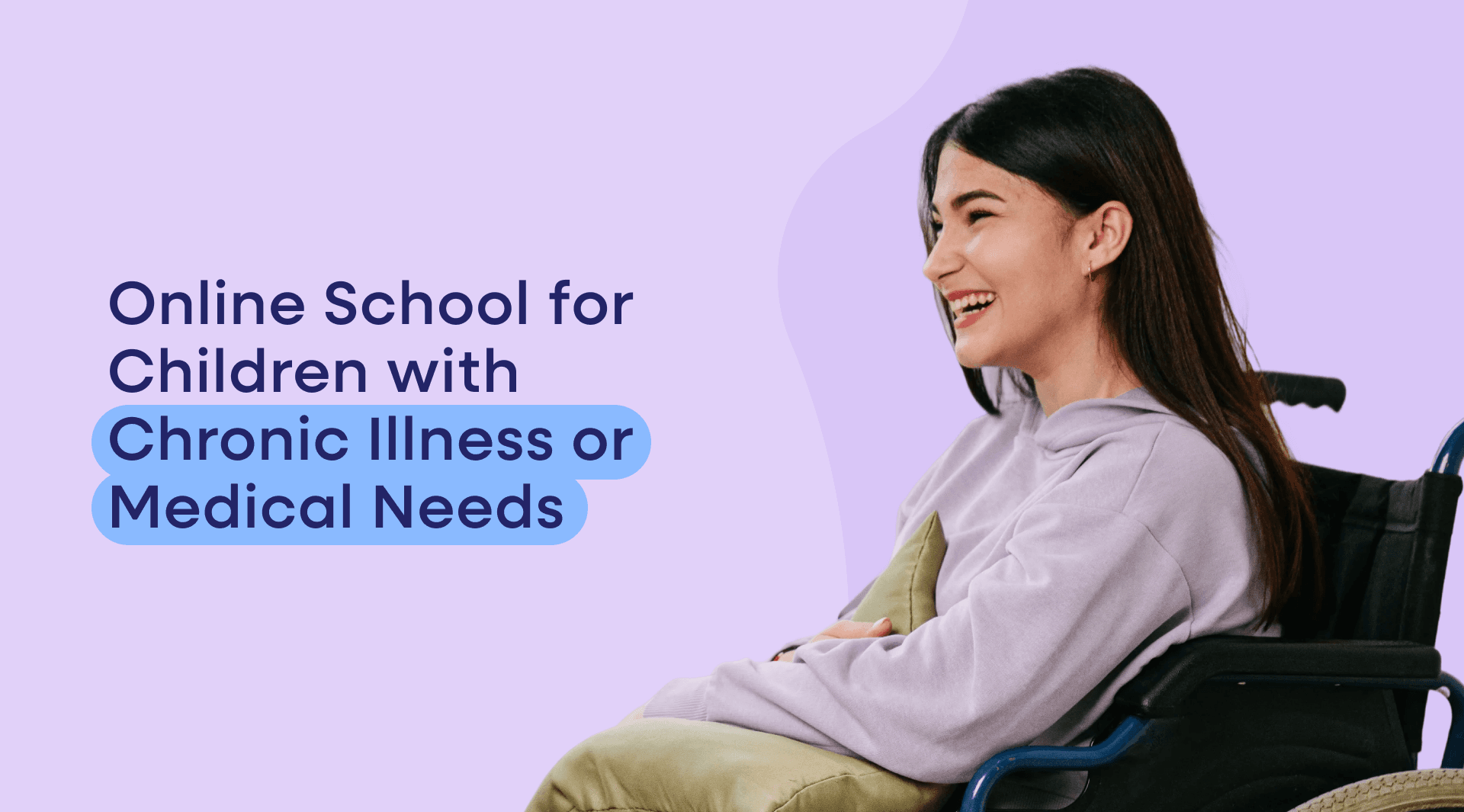
Online School for Children with Chronic Illness or Medical Needs
For families managing a child's medical condition alongside their education, this is frequently not a lifestyle preference — it is a practical necessity.
Online school enables children with chronic illness or significant medical needs to receive qualified teacher-led education, work toward Pearson Edexcel IGCSE and AS Level qualifications, and maintain academic continuity — regardless of how variable their health is on any given day. It removes the physical demands of attending a campus while preserving the structure, teacher relationships, and academic rigour that support both learning and wellbeing.
The educational impact of chronic illness
Chronic illness in children and young people — including conditions such as ME/CFS, Crohn's disease, lupus, Type 1 diabetes, epilepsy, Lyme disease, post-viral conditions, cancer treatment and recovery, and many others — creates a specific educational challenge: unpredictability.
A child with a chronic condition may have good weeks and difficult weeks. A treatment cycle may require several days of recovery. An exacerbation may make a full school day physically impossible. Hospital appointments fall during school hours. Energy levels vary significantly from morning to afternoon, or from one day to the next.
Traditional schools struggle to accommodate this variability:
Attendance requirements create pressure to attend on days when attendance is genuinely harmful
An extended absence creates academic gaps that are difficult to close on return
Social reintegration after periods of absence is often stressful for already depleted young people
Examination concessions — when available — require extensive documentation and frequent reapplication
The cumulative effect is that medically complex students often fall progressively further behind their peers — not because of cognitive limitations, but because the educational system was not designed to flex around their health.
How online school accommodates medical needs
Attendance from anywhere, at variable times. A student with a morning medical appointment can attend afternoon live lessons and watch the morning recordings that day. A student who has a difficult health day can watch recorded lessons when they have the energy — whether that is 4 pm or 9 am the following morning.
Recorded lessons as a safety net. No lesson content is lost to medical absence. All live lessons are recorded and available to replay at any time. A student who misses two weeks of lessons during a treatment cycle returns to full content coverage, not to a gap.
Adjustable daily load. On high-energy days, a student can complete a full day's academic programme. On low-energy days, they can complete a partial programme and catch up the remainder when energy returns. This flexibility is not available in a physical school without formal arrangements that require documentation and administrative coordination.
Home-based examination preparation. For students whose medical needs make travel to an examination centre a concern, early planning of examination timing — selecting the series that best aligns with a period of expected stability — is essential. Teneo's academic team directly supports this planning.
Reduced infection exposure. For students who are immunocompromised — whether due to medication, condition, or cancer treatment — the absence of a physical campus significantly reduces infection risk. Students can attend school without the exposure that a crowded building creates.
Examination access arrangements for medically complex students
Students with chronic medical conditions can apply for access arrangements for Pearson Edexcel IGCSE and AS Level examinations. Typical provisions include:
Additional time (25% standard; more in documented exceptional cases)
Rest breaks within the examination
Separate invigilation rooms
Permission for medical equipment (blood glucose monitors, medication)
Examination centre flexibility in exceptional circumstances
All access arrangement applications require supporting medical documentation — typically from the treating physician or a qualified assessor. Applications should be made through the examination centre well in advance of the examination series. Begin this process during Year 9 for IGCSE, or the summer before Year 12 for AS Levels.
Supporting a medically complex student at an online school
Communicate medical complexity at enrolment. The more information Teneo's academic team has about your child's condition, treatment cycle, and typical availability patterns, the better they can plan the academic programme around them. Do not wait for problems to arise — build the plan before they do.
Use the parent dashboard proactively. The real-time dashboard shows engagement, submissions, and progress. During periods of reduced health, checking the dashboard regularly allows parents to identify where catch-up is needed and communicate this to the academic team.
Plan examination timing around health calendars. If your child has predictable treatment cycles — chemotherapy, for example, or seasonal exacerbations — plan IGCSE and AS Level examination entries in the series least likely to coincide with a difficult period. This requires forward planning from Year 9 onwards.
Maintain contact with the medical team alongside the school. Online school addresses the educational environment; it does not replace medical management. Ensure ongoing communication between the school, the family, and the medical team so that all three are working with the same information about the child's capacity.
Frequently asked questions about online school for children with chronic illness
Can a child with very variable health complete IGCSEs?
Yes — provided the school's format accommodates the variability. At Teneo, recorded lessons mean academic content is never permanently lost to difficult health days. Examination timing can be planned around health calendars. Access arrangements address the examination environment itself.
What happens if my child needs to take extended time off during the IGCSE years?
The academic team at Teneo plans catch-up support for students who take an extended absence. Recorded content covers the curriculum; teacher support returns to specific gaps. Early communication about anticipated absence allows the catch-up plan to be ready before the student returns.
Is online school safe for immunocompromised children?
Online school eliminates the daily exposure to infection on a physical campus. For immunocompromised students, this is a significant health benefit alongside the academic ones. Basic home device hygiene is the primary ongoing consideration.
Does Teneo have experience with medically complex students?
Yes. Teneo's open admissions policy and inclusive model mean medically complex students are part of the student body. The admissions team can discuss specific medical contexts and how the school has supported similar situations. Contact the admissions team to have that conversation before applying.
View Teneo's real school day structure, explore the British International pathway, view accreditation and results, or start the enrolment guide.
Share