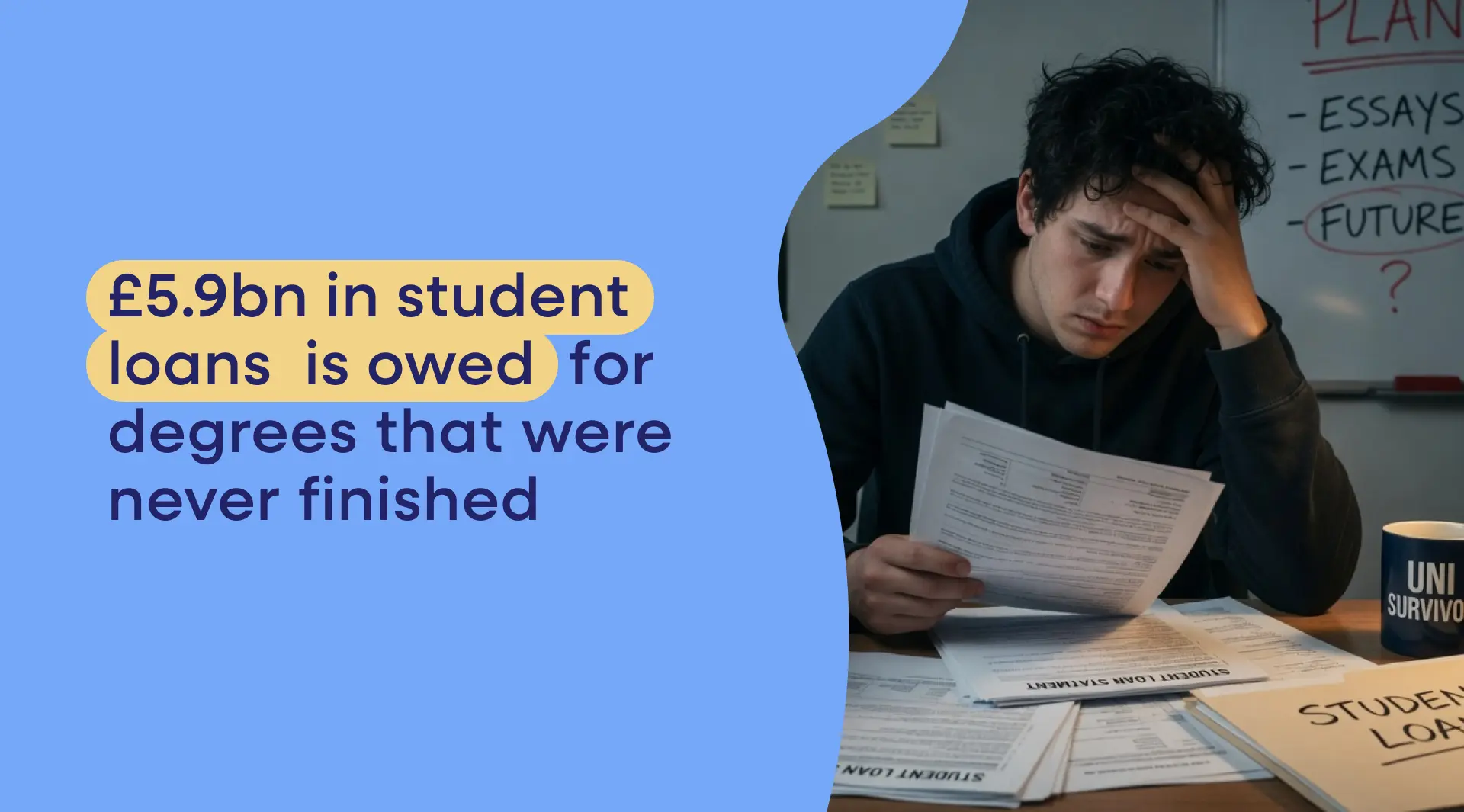
£5.9bn Owed for Degrees Never Finished: What It Means for UK Families
For decades, UK families have been told the same thing: get your child to university, and their future is secure. For many students that holds true. But new data lays bare the cost for those it does not — and it should give every UK family planning their child's path pause for thought.
Nearly 200,000 people across England, Wales and Northern Ireland are still repaying student loans for university courses they dropped out of and never completed, owing a combined £5.9 billion — with seven in ten having left in their first year or before. The figures, obtained by Teneo International School from the Student Loans Company under Freedom of Information, reveal for the first time not how many students leave, but what they owe once they do: an average of £31,686 in England, for no qualification. As tuition rises to £9,790 from September 2026, the data raises a hard question for UK families: is too much pressure being placed on a single, expensive route that, for a growing number, does not work out?
Teneo International School obtained figures from the Student Loans Company under Freedom of Information (Ref: FOI 196-26, response dated 1 July 2026). They show, for the first time, the debt carried by students who withdraw:
191,478 people are currently repaying loans for courses they withdrew from without completing (England 177,365; Wales 9,078; Northern Ireland 5,035).
Between them, they owe an outstanding £5.92 billion.
In England, the average outstanding balance is £31,686 — for no qualification.
Seven in ten leave in their first or foundation year.
17,812 people in England left in their third year or later, owing an average of around £67,000.
The largest single balance in England is £240,795.
The debate about university dropouts has always focused on how many leave. This is the first data to put a number on what they owe. See how Teneo prepares students for university.
Why does the debt hit first-year leavers hardest?
The data shows how quickly students take on debt before leaving. Of the 177,365 people in England carrying this debt, more than half — 97,102 — dropped out in their first year, with a further 27,766 leaving during a foundation year.
The mechanism is simple and unforgiving. Student loans are drawn down at the start of each academic year to cover tuition and living costs, so a student who leaves partway through their first year can already have taken on a full year's tuition — up to £9,535 — plus a maintenance loan, before walking away. That debt stays with them for up to 40 years, repayable the moment they earn above the threshold, whether or not the degree was ever finished or a graduate job ever followed. In other words, a young person who realises within a term that the course is not right can already owe thousands for the privilege of finding out.
What about students who almost finished?
The problem is not confined to early leavers. In England, 17,812 people withdrew in their third year or later, having completed most of a degree, and carry an average of around £67,000 each. They did the overwhelming majority of the work, took on the full cost, and left with nothing to show for it. It is a stark illustration that the financial risk of the single-route model runs the entire length of a degree.
Why does this matter more now?
The timing sharpens everything. University withdrawal rates have reached their highest recorded levels, and both the Student Loans Company and the government have warned the numbers will keep climbing unless maintenance support keeps pace with the cost of living. The Sutton Trust has found that a quarter of students say the cost-of-living crisis has made them less likely to finish their degree, and mental health is now among the most common reasons for leaving.
Meanwhile, the cost keeps rising: tuition fees increase again to £9,790 from September 2026, and MPs are debating student loan reform this year. For UK families planning a child's future today, the backdrop is one of rising cost and rising risk — which makes the question of how to prepare a child, and whether to treat university as the automatic destination, more pressing than ever.
What Teneo's Chief Marketing Officer says
Taryn Jankes, Chief Marketing Officer at Teneo International School, said:
"We tell young people there is one path to a good future: go to university, take on the debt, it will be worth it. This data shows what happens when that promise doesn't hold. Nearly 200,000 people are now paying for a degree they don't have, most having left within a year, often because the money ran out or the course was never right for them. A student who drops out in their first term can still owe thousands for the privilege, and some who left in their final year owe more than £60,000. The real question is why so many are funnelled onto one route with no flexible alternative, and why the cost falls hardest on those who realised soonest that it wasn't for them. Deciding university isn't right for you shouldn't come with a five-figure bill."
What can UK families take from this?
The data is not an argument against university — for many young people it remains the right route and a completed degree is hugely valuable. It is an argument against treating university as the only route, and against sending a child there under-prepared or onto a course that was never the right fit. Two practical lessons follow.
Prepare properly. A student who arrives at university genuinely ready — academically confident, with strong study skills and real subject grounding — is better placed to complete and less likely to become one of these statistics. A rigorous, well-supported secondary education that builds genuine understanding gives a young person that foundation. Teneo delivers the Pearson Edexcel British International curriculum — International GCSEs, AS and A Levels — with live specialist teaching and progress tracking, and supports students to choose subjects that genuinely fit their intended direction, reducing the risk of the expensive false start the data documents. Read about the academic approach.
Keep options open, and choose deliberately. A young person served well by their education heads toward university (or an alternative) as an informed choice, not a default. Pearson Edexcel A Levels are recognised by UK universities including Oxbridge and Russell Group, and worldwide — and they equally support alternative routes such as degree apprenticeships, vocational pathways and study abroad. Good guidance on subject and course choice helps ensure that if a student does go to university, it is to the right course for them. Read how A Levels support university applications.
Preparing a child well and helping them choose deliberately will not prevent every dropout — but it directly addresses the two things the data shows go wrong most: students who were not ready, and students on a course that was never right for them.
Frequently asked questions
How much do UK students owe for unfinished degrees?
Data obtained by Teneo International School from the Student Loans Company under Freedom of Information shows 191,478 people across England, Wales and Northern Ireland owe a combined £5.9 billion for courses they withdrew from without completing — an average of £31,686 each in England, for no qualification.
When do most UK students drop out?
Seven in ten leave in their first year or a foundation year. In England, more than half of those carrying dropout debt left in their first year, and fewer than one in ten reached their third year.
Why do students owe so much even after leaving early?
Loans are drawn down at the start of each academic year, so a student leaving partway through year one can already owe a full year's tuition (up to £9,535) plus a maintenance loan. That debt is repayable for up to 40 years regardless of whether the degree was completed.
Is this data an argument against going to university?
No. University is the right choice for many students and a completed degree remains valuable. The data warns against treating university as the only route, and against students going under-prepared or onto a course that was never the right fit. Preparation and informed choice are the lessons.
How can I reduce the risk for my child?
Ensure they are genuinely well prepared for university and hold recognised qualifications that keep multiple routes open — university, degree apprenticeships, vocational pathways or study abroad — so the decision is deliberate. Good subject and course guidance helps a student choose a path that fits. Read about Teneo's approach.
How much will university tuition cost from September 2026?
Tuition fees rise to £9,790 from September 2026. Combined with rising withdrawal rates and cost-of-living pressures, this makes preparing a child well and choosing their path deliberately more important than ever.
Where does this data come from?
The Student Loans Company's response to a Freedom of Information request (Ref: FOI 196-26, dated 1 July 2026), covering borrowers funded by Student Finance England, Wales and Northern Ireland who withdrew and did not re-enrol and hold an outstanding balance. Scotland operates a separate student finance system and is not included.
The £5.9 billion owed for degrees never finished is a warning for every UK family planning a child's future: prepare them well, and keep their options open. To explore an education that does both, see Teneo International School's British International programme, review the results, or speak to the admissions team.
Share